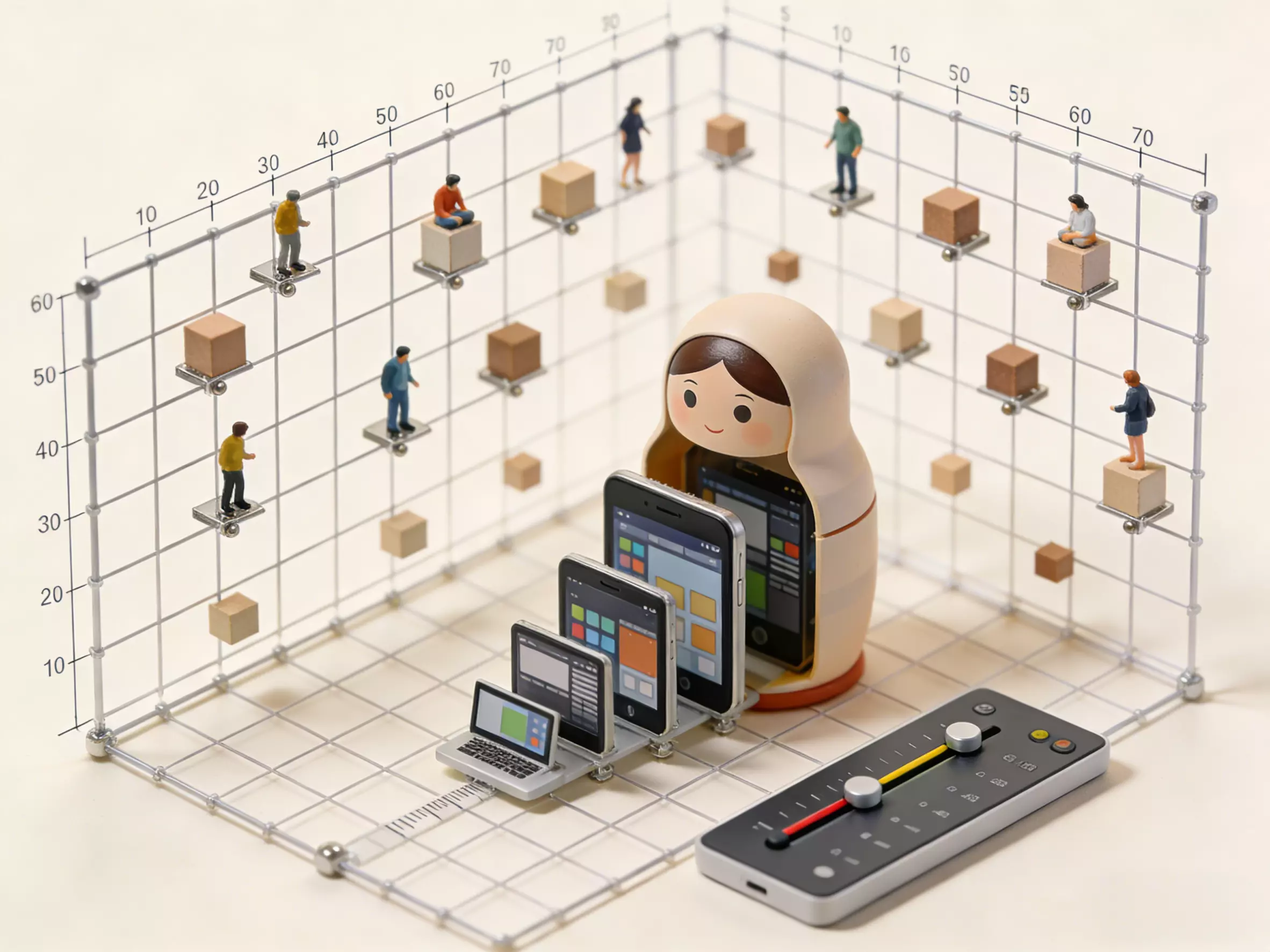
Layout in Design Systems refers to the arrangement of visual elements on a page, which helps create a coherent and functional user interface. A well-designed layout ensures that content is organized in a way that enhances readability, usability, and visual appeal. Layouts typically rely on grids—structured frameworks of columns, gutters, and margins—to create a consistent and flexible page structure. This use of layout grids helps maintain a strong visual hierarchy by guiding the placement of text, images, and interactive elements, ensuring that the most important content stands out and is easy for users to find.
Key concepts explained
Layout in Design Systems is like the blueprint of a building that determines where each room, wall, and corridor should go to create a functional and aesthetically pleasing space. Imagine designing a house; you need to decide where the living room, kitchen, and bedrooms will be and how people will move between these spaces. Similarly, in UI design, the layout determines where different elements should be placed on the screen, ensuring that the interface is intuitive and easy to navigate.
Using layout grids allows designers to create responsive layouts that adapt to different screen sizes, from mobile devices to large desktop monitors. These grids provide a structure that adjusts based on screen size, ensuring that elements are appropriately spaced and aligned. Responsive grids are crucial for maintaining consistency and usability across devices, allowing the layout to change fluidly as the screen size changes.
Layout and Grids in Design Systems
In Design Systems, layout refers to the overall arrangement of visual elements on a page, ensuring content is well-organized and visually appealing. Layouts provide the structure that defines the placement and flow of components across different screen sizes. Grids, on the other hand, are the underlying frameworks used to create these layouts. They consist of columns, gutters, and margins that help align elements consistently. While grids establish the foundational structure, the layout uses these grids to create a cohesive and responsive user experience.
For example, the IBM Carbon Design System uses a 2x Grid system, which employs an 8-point base grid for spacing and layout. This grid helps create flexible and scalable layouts that maintain visual harmony across various screen sizes and devices, ensuring a consistent user experience.
How to use Layout in Design Systems?
For example, the Apple Design System uses layout grids to create a consistent structure across its applications. Apple's Human Interface Guidelines specify using adaptability, visual hierarchy, and safe areas to ensure balanced layouts that adapt to various screen sizes. These responsive grids help maintain visual harmony and usability across devices, ensuring that elements are properly aligned and spaced for a cohesive user experience.